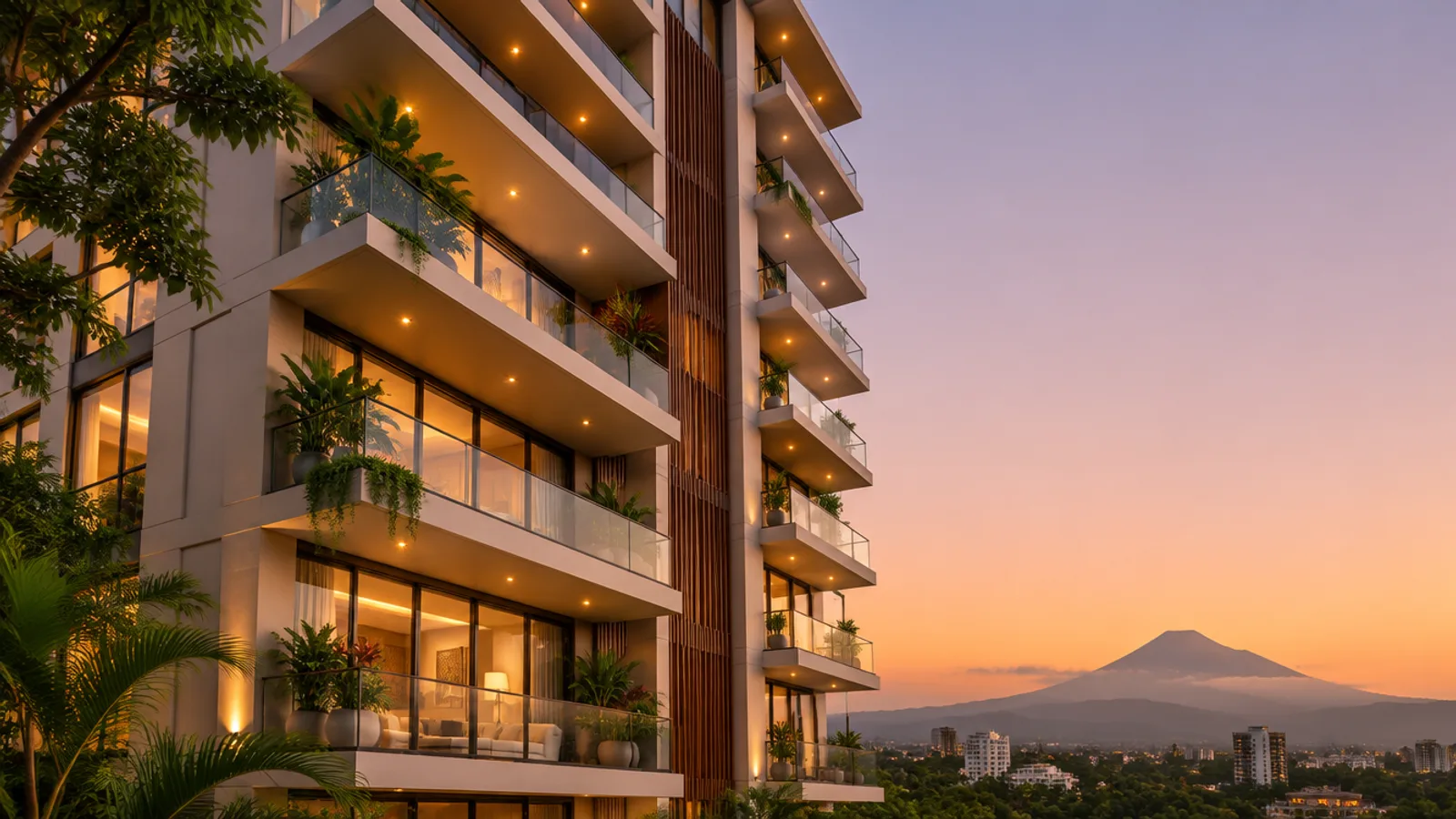
Technology for towers and developments in San Salvador: integrating from the plans
In a tower, technology is decided on the plans. After that it isn’t decided anymore: it’s patched.
For a developer, integrating intelligence from the plans costs a fraction of what it costs to open walls later, and it is a pre-sale headline that sets the project apart. This is the guide to what to integrate, what to demand and how to close it with a single point of responsibility.
The decision is made on the plans
Pre-installing during construction costs a fraction of what it costs to open walls later. In a tower that multiplies by every floor, every apartment and every common area. Technology left for the end fights with the wiring, the finishes and the deadlines; technology coordinated from the design is integrated without anyone noticing.
That is why an integrator should come in at the design phase: review the plans, define the infrastructure and coordinate it with the rest of the building’s systems, and not show up when construction ends.
What gets integrated in a tower
- The common areas. Lighting, climate control, access and consumption, coordinated so they use less and are managed from a single place.
- The apartments. A common infrastructure base in all of them and, on top, the level of control each buyer wants. With a system that lets you start with the essentials and expand without redoing anything, the apartment can be delivered ready and grow later.
A tower has two scales, and it makes sense to think about both:
An open standard like KNX fits well here: it is the same for the wiring of the whole tower, it has more than 500 manufacturers behind it and it doesn’t tie the buyer to a single brand.
The pre-sale headline
“Intelligent as standard” sells. In San Salvador, as in any market, a project with concrete infrastructure is easier to explain than one with an abstract promise, and what is tangible is absorbed faster. It is a pre-sale headline that sets the project apart, as long as it can be demonstrated and the buyer receives what they were shown.
That is where the caution lies: it is not about announcing technology, but about delivering it, documenting it and backing it afterward.
Common areas that use less
One of the advantages that interests building administrators most is the consumption of the common areas: hallways, parking, access and climate control. If they are coordinated with schedules and zone control, they use less, and that can translate into a lower maintenance fee for the owner.
There is an international reference, the ISO 52120-1 standard on building automation, and the real figure depends on each project. What matters is that consumption is measured, not that it is promised.
How it is coordinated with construction
- Consulting and design. The project is heard, designed on plans and validated with the developer before construction.
- Pre-installation during construction. The wiring is coordinated with the builder, the architect and the electrician.
- Installation and commissioning. Assembly, programming and custom scenes.
- Handover. The project is considered complete when the client approves it, with a handover and acceptance record.
An orderly process has four steps and a single point of responsibility:
It is the process we follow at Dommux for builders and developers.
What changes in San Salvador and surroundings
The towers of San Salvador, Santa Tecla and Antiguo Cuscatlán share a warm climate, a high demand for climate control in common areas and apartments, and a buyer who already expects technology as standard. That is why climate control, common-area lighting and access are the first systems worth coordinating.
And since the tower is sold in stages, it makes sense for the infrastructure not to depend on all the apartments being furnished at once: a common base allows delivery in phases and switching on the rest when each buyer decides.
What to document for the administration
Ask that, at handover, the following is put in writing: the as-built plans of the installation, the equipment list with brand and model, who provides support and how to contact them, and what the administration can change without calling the integrator. Without that, the system depends on one person’s memory, and people change.
What a developer should demand
- An open, documented standard, so that neither the project nor the buyer depends on a single brand.
- A single point of responsibility from start to finish, not a sum of suppliers.
- Coordination with construction from the design, not at the end.
- A documented handover approved with a signed record.
- Ongoing service after handover, in writing.
- A system that runs locally and doesn’t depend on a manufacturer’s cloud.
The risk of the orphaned system
The biggest risk for a developer is not the initial cost, but the buyer inheriting a system with no support. If the integrator disappears or the brand closes its cloud, the apartment is left with devices that no longer respond, and the project’s reputation suffers.
That is why it makes sense to have an integrator who stays, with ongoing service for each resident and for the common areas. More on how to avoid that trap in product versus project and in why infrastructure speeds up sales.