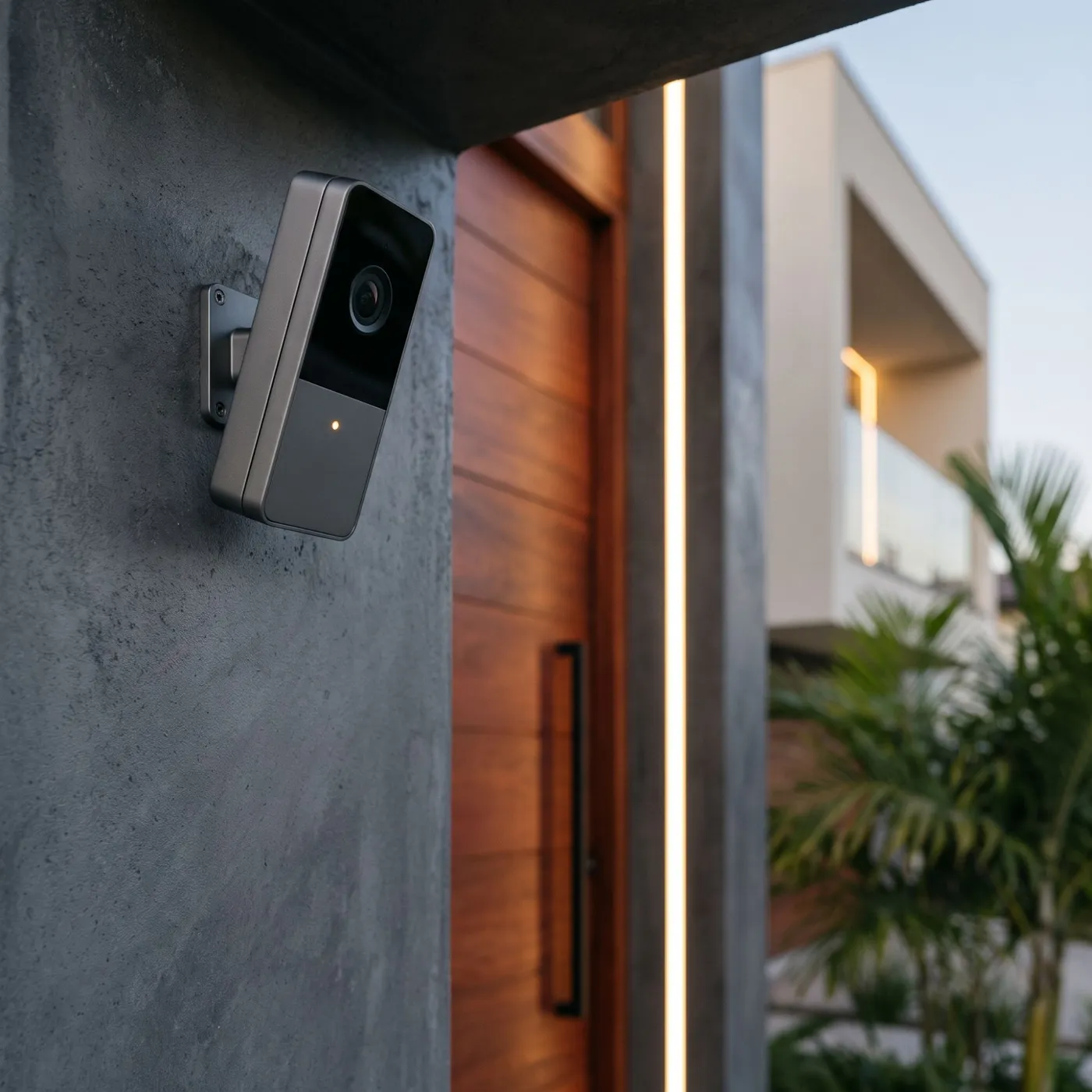
Traditional security is reactive and fragmented — and that is why it fails exactly when you need it most.
The alternative is not to pile up more loose devices, but to understand security as integrated, proactive infrastructure. And the evidence backs the change.
The problem with conventional security
- Conventional cameras only help you review things after something has happened.
- Alarms generate so many false positives that you end up ignoring them.
- Keys get lost, get copied and slip out of control.
- Human surveillance has limits of attention and response.
More isolated devices solve nothing. What changes the outcome is a system where every component communicates with the others and they reinforce one another.
What the evidence says
Intelligent security is not a marketing hunch; the data support it on two fronts.
Deterrence (before the incident). A Rutgers University study concluded that the presence of an alarm reduces the risk of victimization by about 50%, and that homes with visible security suffer up to 60% fewer intrusion attempts (Frontpoint/Rutgers). Research from the University of North Carolina adds the why: 83% of burglars check for an alarm before acting, and 60% look for another target if there is one (SafeHome). Security deters when it is seen and perceived as coordinated.
Reliability (during the incident). The old problem — ignoring the alarm because of false positives — is tackled by cross-checking signals: an opening sensor, a motion sensor and a camera that coincide on the same zone say more than any of them separately. At Dommux, that coordination happens inside your property, and the intelligence does not process your cameras' video.
The conclusion joins both: a visible, integrated, intelligent system deters beforehand and responds quietly afterward.
The five Dommux security layers
1. Perimeter protection. Opening and motion sensors, cameras and exterior lighting that activate in a coordinated way.
2. Access control. Digital locks and access control, with permissions by person (family, household staff, visitors) and a log of every entry.
3. Indoor surveillance with privacy. Motion and opening sensors, and cameras that you turn on or off from the app.
4. Environmental sensors. Smoke, temperature and humidity, and valves that shut off the water in the event of a leak.
5. Response and notification. Alerts to your phone and scenes with the lights, alongside the siren of your certified alarm.
Lights and alerts: the most effective deterrence
Since most intruders pick the easiest target and check whether the house is occupied, a home where the exterior lights react and your phone receives the alert instantly goes straight at their decision criteria. The system responds in seconds and you know about it wherever you are.
The integration that makes the difference
A perimeter sensor detects movement, the exterior lights come on and your phone receives the alert. All coordinated, in seconds — something impossible with devices that don't talk to one another.
References
- Frontpoint / Rutgers University — Effectiveness of a residential security system (risk −50%, attempts −60%)
- SafeHome.org — Residential security statistics (UNC study: 83% check for an alarm)
Note: deterrence and false-alarm statistics from international studies and markets; they indicate magnitude and are not Salvadoran data.