When someone asks whether KNX or WiFi is the better fit, they’re almost always asking something else: what will become of their home in ten years?
Home automation is installed in two ways: by cable, with a standard like KNX, or by radio, with devices that connect to WiFi. Both work. What changes is what they depend on, how long they last and how much it costs to fix them.
What each one is
KNX is an open international standard (ISO/IEC 14543-3) and European standard (EN 50090), stable since 1990, with more than 500 manufacturers and more than 8,000 products. Pushbuttons, sensors and actuators are linked by a data cable, and each one carries its own logic. That is why, even if everything else fails, a pushbutton still turns on its light.
On the wireless side, each device (a bulb, an outlet, a shade) connects to the router over WiFi and is controlled from its manufacturer’s app, almost always through that brand’s cloud. Other radios exist, such as Zigbee, Bluetooth or Thread, with similar logic: a battery or a plug, a signal and a manufacturer behind it.
Where each one wins
- If the internet goes down. A wired installation with a local controller keeps turning on lights and running scenes. Many WiFi devices lose functions when they lose the connection to their brand’s cloud.
- How long it lasts. The reference lifespan of a KNX installation is 15 to 20 years. A WiFi device lasts as long as its manufacturer decides to maintain the app and its cloud.
- Mixing brands. In an open standard, a component from one manufacturer understands one from another. With WiFi, each brand usually brings its own app.
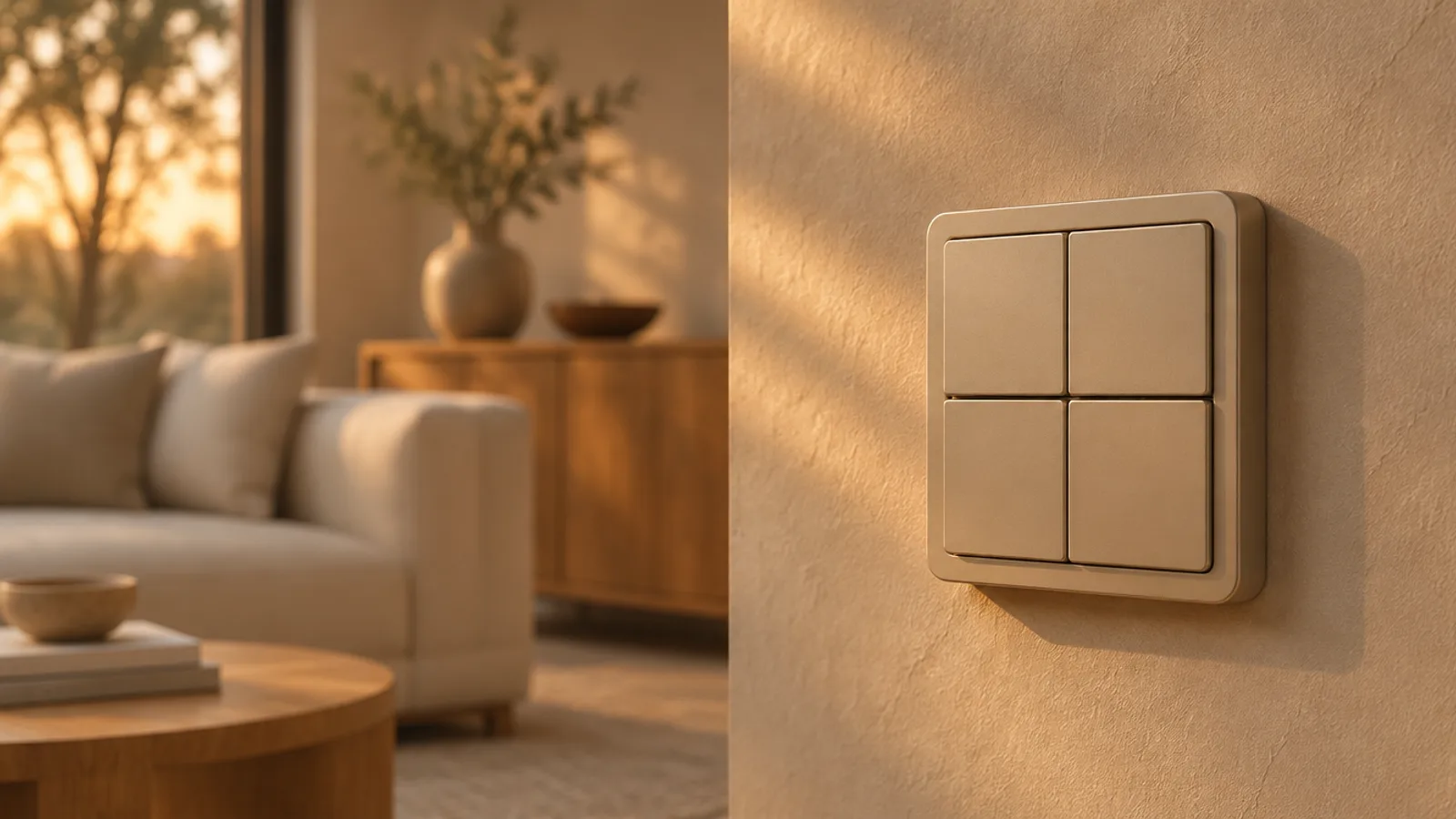
- Installing it. Wireless goes in within a day and without construction work. Wired is decided on the plans.
- Maintaining it. Battery-powered devices need new batteries and signal checks; outdoors, under the sun and the rains of the wet season, even more.
There is no absolute winner. These are the differences that matter when you decide:
Starting with WiFi devices usually costs less. What gets expensive is what comes later: changing brands, redoing the installation or being left with a system that has no support.
An example: the living room of your home
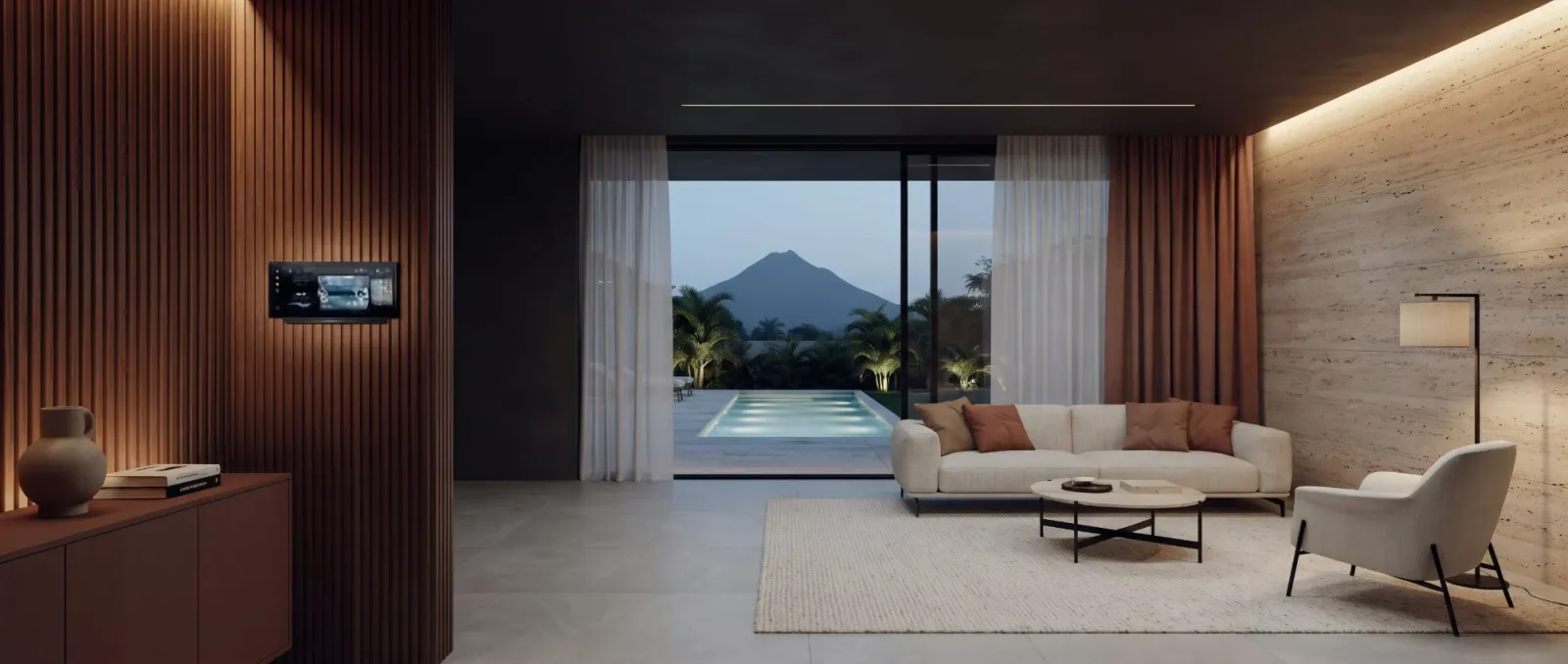
Picture a living room with three lights, a shade and an air conditioner. In a wired installation, all of that is grouped into one scene, “Movie,” which lowers the shade, dims the lights and sets the climate. The property’s controller runs it with a touch of a pushbutton or in the app. If the internet fails, the pushbutton still does it.
In an installation of separate WiFi devices, each of those elements has its own app, and the scene depends on the brands agreeing with each other and on each one’s cloud being up. It may work very well the first year. The question is what happens in the fifth.
This is not an argument against wireless, which has its place. It is a reason to decide with the long term in mind, not the convenience of day one.
New construction: decide it on the plans
If you are going to build, the question is not KNX or WiFi, but when the decision gets made. Pre-installing the wiring during construction costs a fraction of what it costs to open walls later. Even if you won’t install everything today, leaving conduits and boxes planned saves you from going back to the job site.
A wired system also lets you start with the essentials and expand whenever you like, without redoing what came before. Coordinating it from the start with the architect, the builder and the electrician is what makes the technology felt and not seen.
Renovation or a home already built
If the home is already finished and you don’t want to open walls, wireless makes complete sense, and a real installation usually combines both: cable where you can and radio where you can’t. The scope is adapted to each property, and the way to know what suits you is a visit, not a catalog.
What is worth avoiding is filling the home with loose devices in no particular order: five separate devices don’t make a home that works as one, because each lives in its own app and its own cloud, and they don’t know about each other.
Five questions to decide
- Is it new construction or a renovation? In new construction, the cable is decided now; in a renovation, the scope is adapted.
- How many rooms do you want to automate, and how deeply? One light with scenes is not the same as lighting, climate, shades and access working together.
- How many years do you want it to last? If the answer is “as long as the home lasts,” the open standard carries weight.
- Do you want to be able to change brands without redoing anything? Only an open standard gives you that.
- What must keep working if the internet fails? Ask them to show you by unplugging the router.
If you want the full sector comparison, you will find it in the home automation guide for El Salvador; and if you want to understand the standard, in KNX in El Salvador.